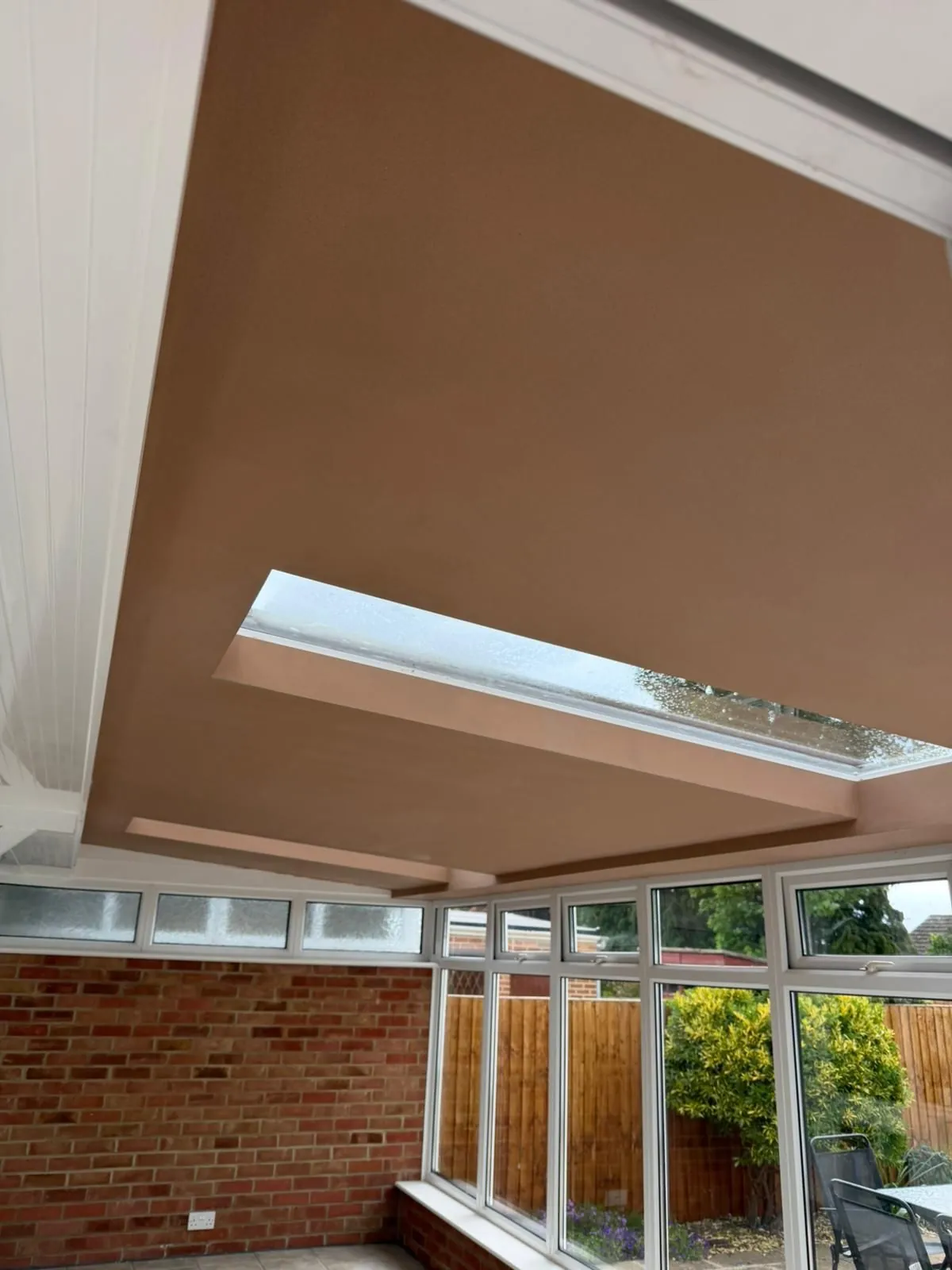
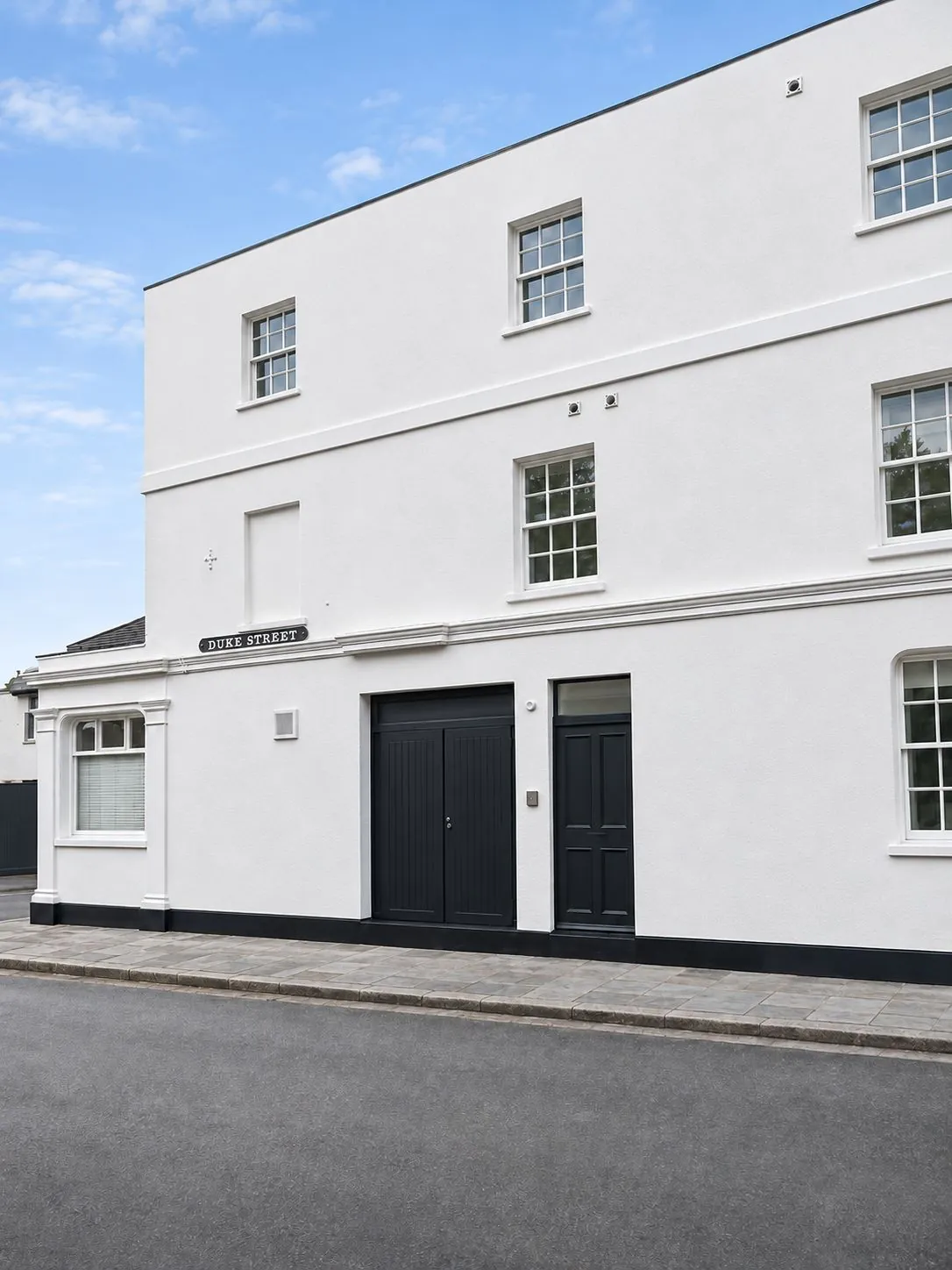
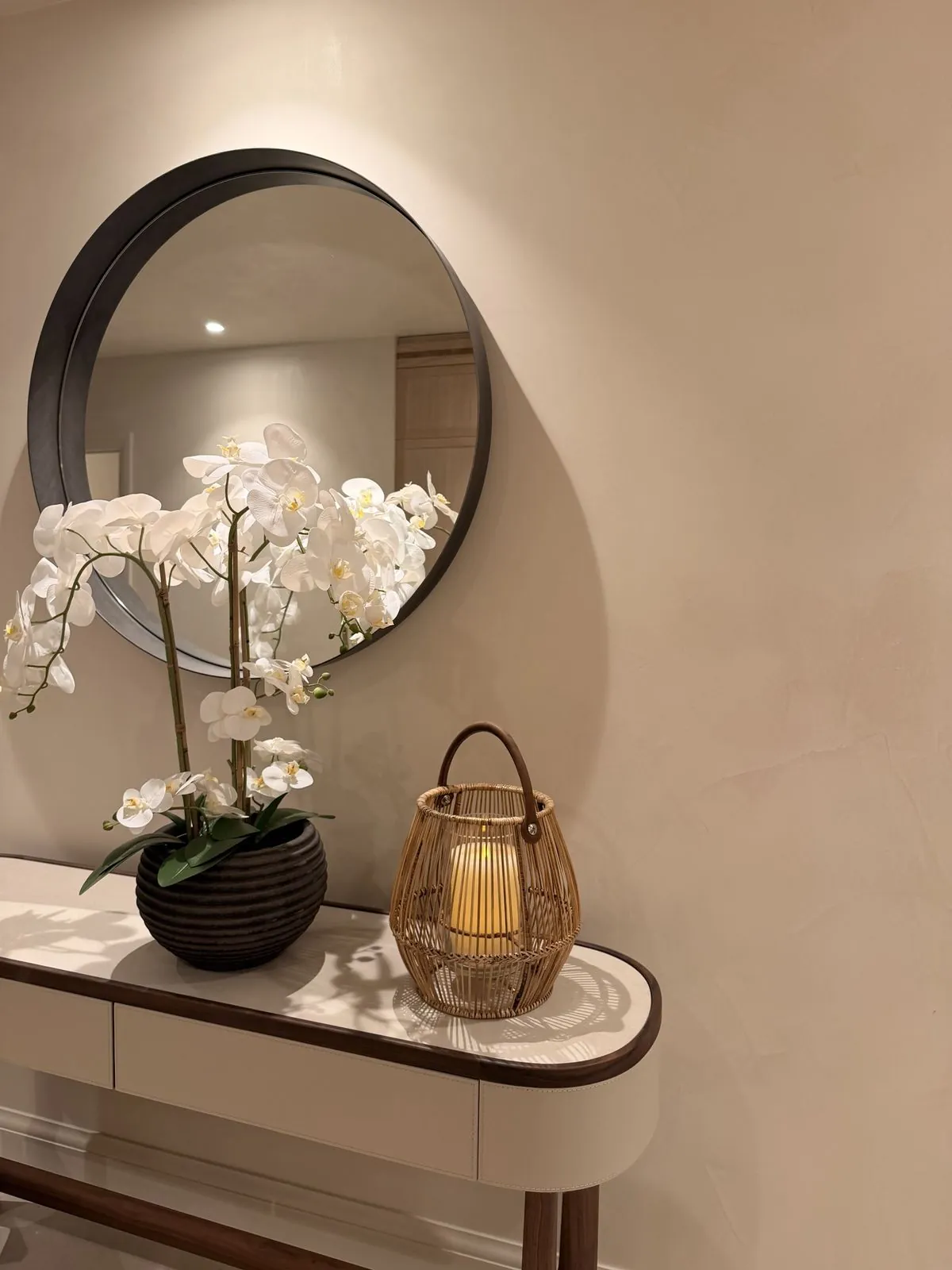
Bathrooms and wet rooms
Walls, floors and showers in one continuous surface with no grout lines, sealed to resist water, with an anti-slip finish where you need grip underfoot.
Best for: Showers, wet rooms and en suites

Microcement gives you one seamless surface across floors, walls and showers, with no grout lines to clean. It's applied in thin layers, often straight over existing tiles or screed, then sealed to make it hard-wearing and water-resistant. We install microcement in homes, bathrooms and commercial spaces across Gloucestershire, and travel for specialist projects across the UK.
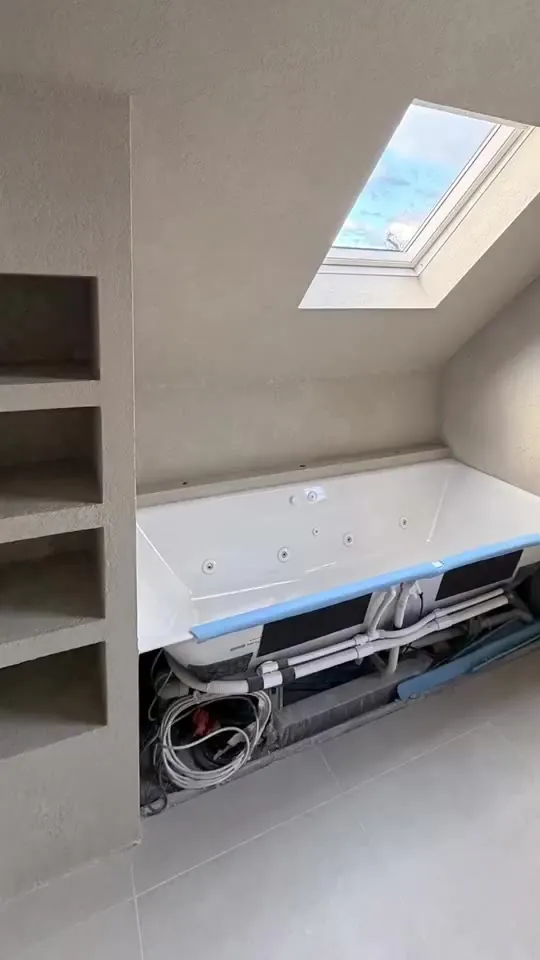
Swipe to see more microcement work
Microcement is a thin, cement-based coating mixed with resins and pigments. It's trowelled on by hand in several layers, just a few millimetres thick in total, and sealed, so it bonds to the surface underneath and creates one continuous finish across floors, walls and into the shower.
Because it's so thin, it can usually go over existing sound tiles, screed or plaster without major demolition, which saves time, mess and disruption. The result is calm, minimal and easy to clean: no grout, no joints, and a finish that can be smooth, softly mottled or pitted for a natural stone look.
We apply every system to the manufacturer's specification, from the bonding primer and mesh-reinforced base coats to the final protective sealer, because that's what makes microcement last.
One material, many uses. Microcement works almost anywhere you want a seamless, modern finish.
Walls, floors and showers in one continuous surface with no grout lines, sealed to resist water, with an anti-slip finish where you need grip underfoot.
Best for: Showers, wet rooms and en suites
Seamless floors over new or existing screed and sound tiles, with reinforcing mesh in the base coats to resist cracking. Suitable for most underfloor heating systems.
Best for: Kitchens, living spaces and open-plan rooms
Feature walls, fireplaces, hearths, niches and ledges, finished in the same material as the floor for a fully continuous look.
Best for: Feature walls, fireplaces and alcoves
Floors, walls and splashbacks in kitchens and utility rooms, sealed against stains for everyday cooking and cleaning.
Best for: Kitchens and utility rooms
Reception desks, counters, toilets and washrooms in shops, offices, restaurants and hotels, where a seamless finish has to look good under heavy use.
Best for: Receptions, washrooms and hospitality
A softer microcement finish inspired by Moroccan Tadelakt, with gentle movement and a hand-polished feel. Ideal for bathrooms and washrooms.
Best for: Bathrooms, washrooms and spas
Microcement is built up in layers over several days, with each one left to dry before the next.
We check the surfaces, talk through the look you want and bring samples, so you can match the colour to your tiles, units or flooring.
Surfaces are cleaned, abraded and degreased, cracks and joints are dealt with, and a bonding primer goes on. New screeds must be dry, with no curing compound on the surface.
Two base coats go on, the first with a reinforcing mesh embedded as an anti-crack layer.
Two thinner finish coats give the colour and texture, with sanding between coats for an even surface.
Primer and protective sealer coats lock in the finish and add water and stain resistance, with anti-slip where it's needed.
We tell you when the room can be walked on and when it's ready for full use, and how to look after it.
A few examples of the spaces we've transformed with microcement.
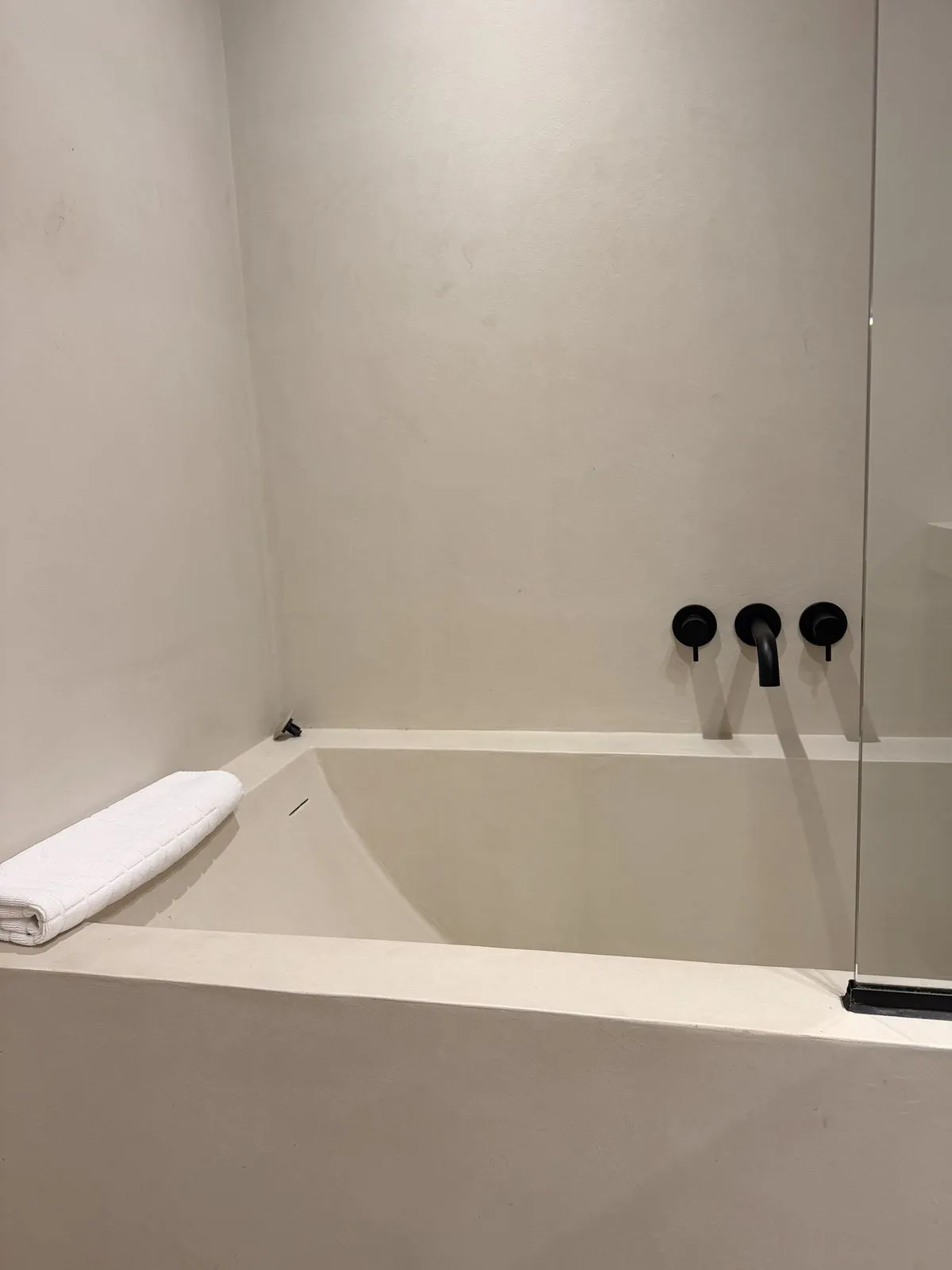
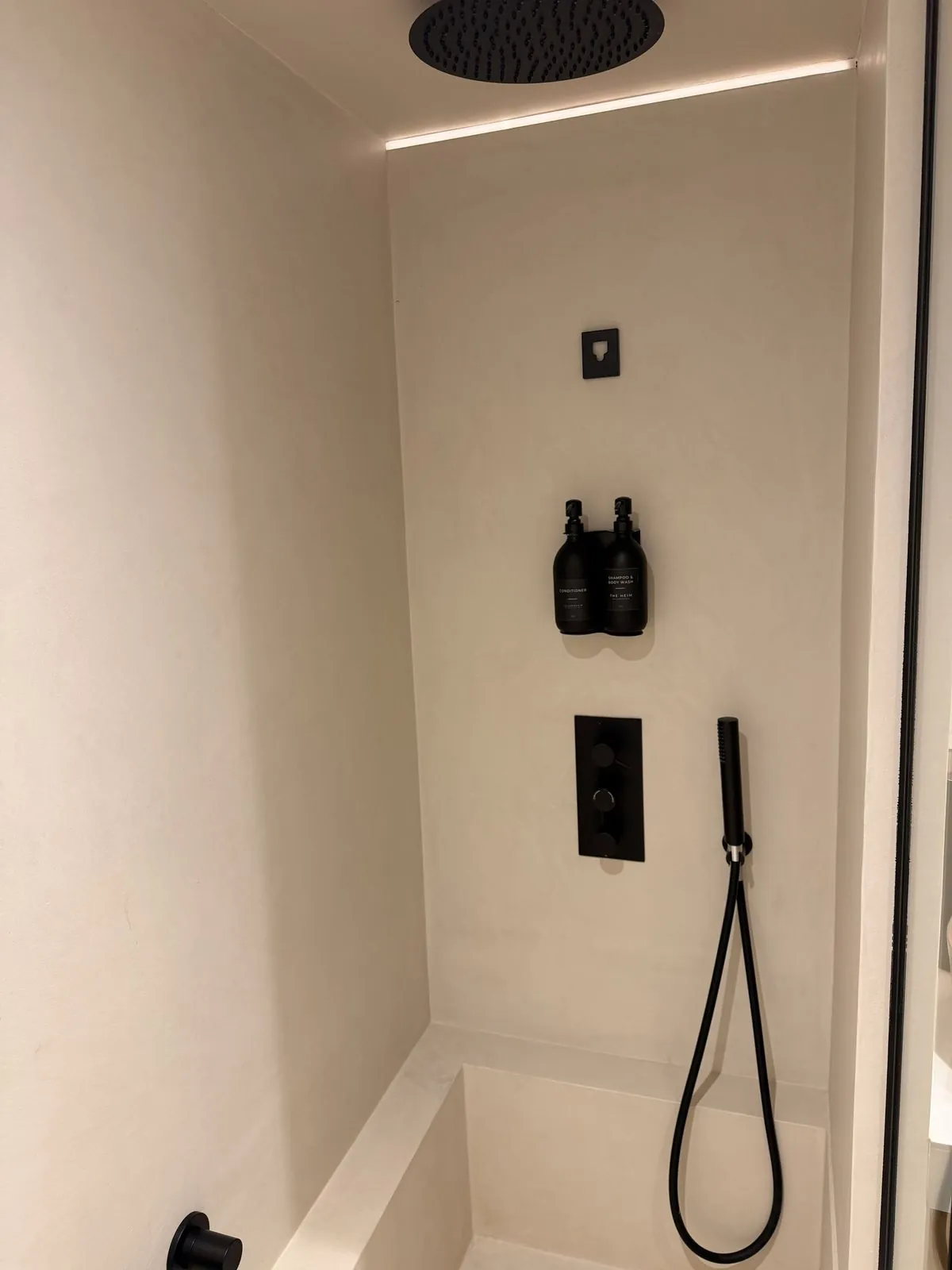
Bathroom
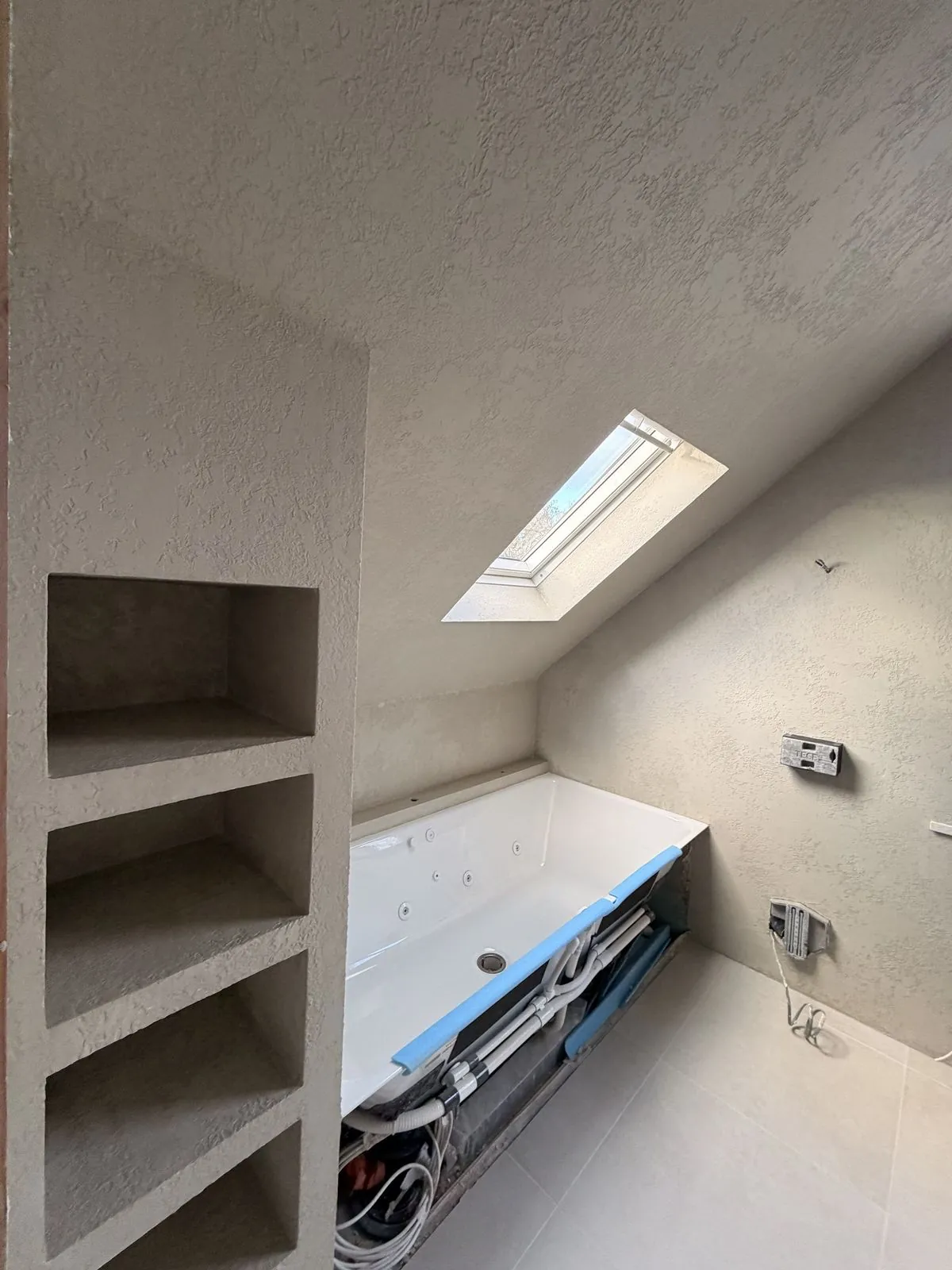
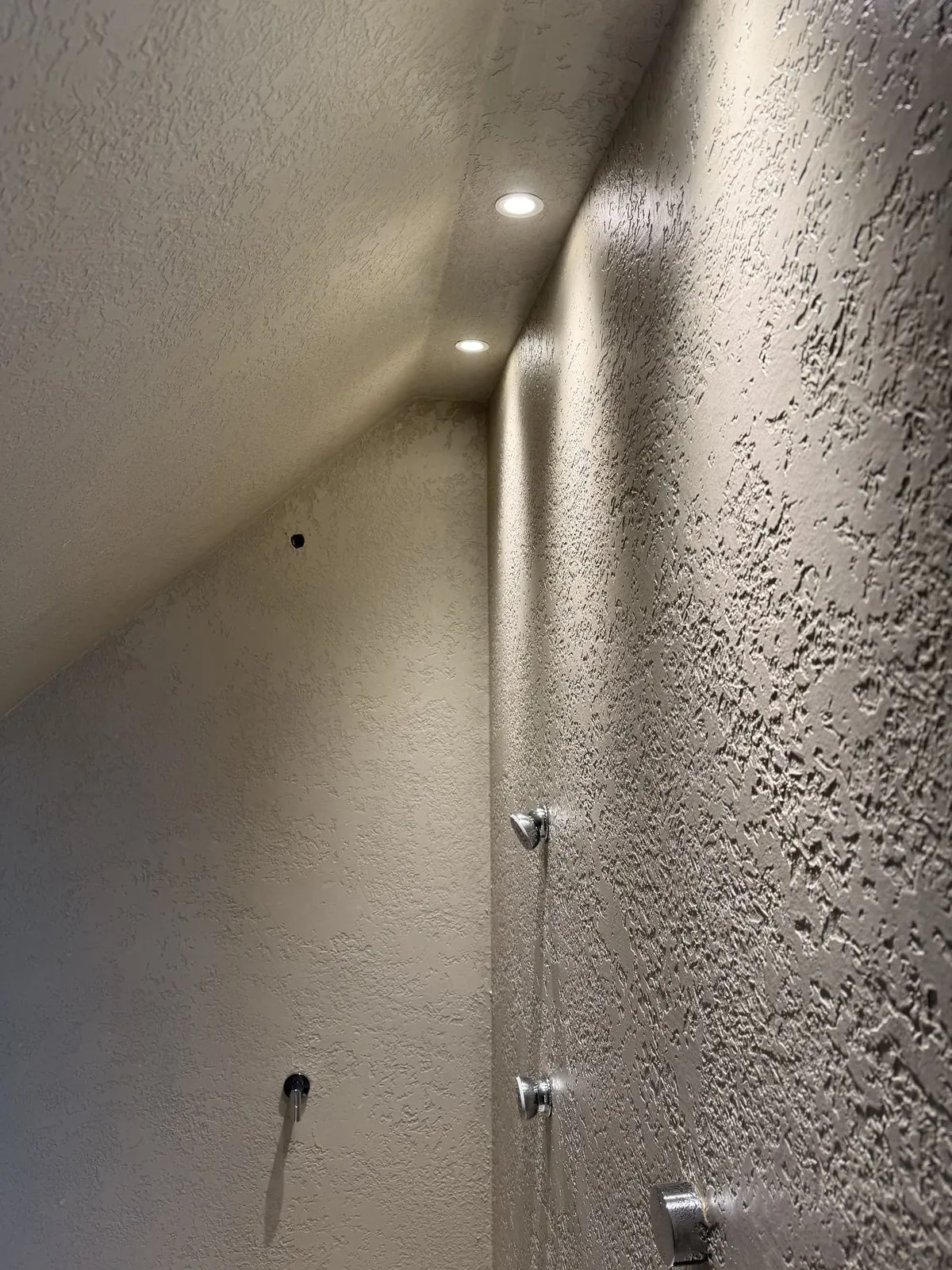
A full bathroom in microcement, including the shower, niches and floor, finished in a pitted texture for a natural stone look.
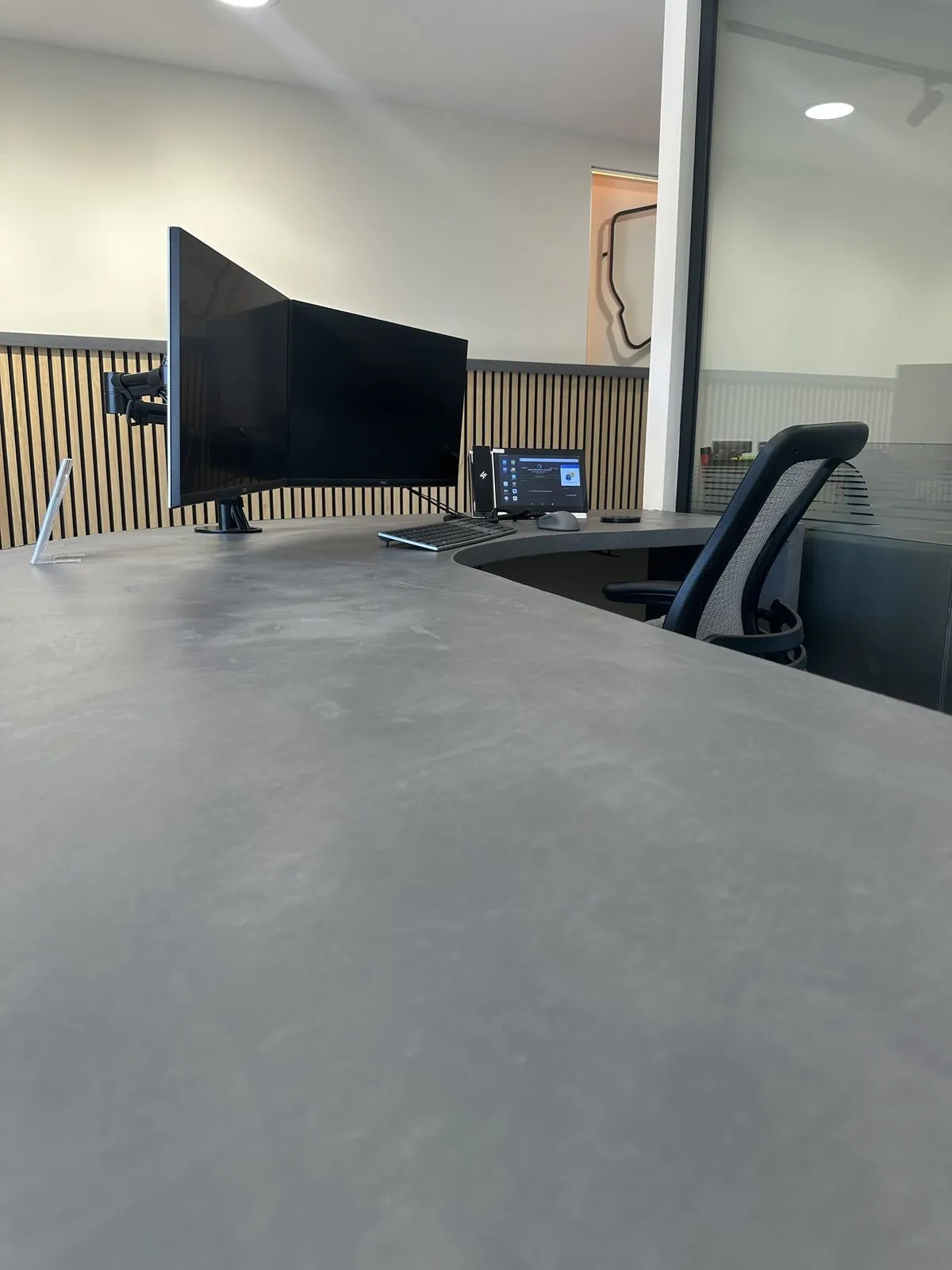
Commercial
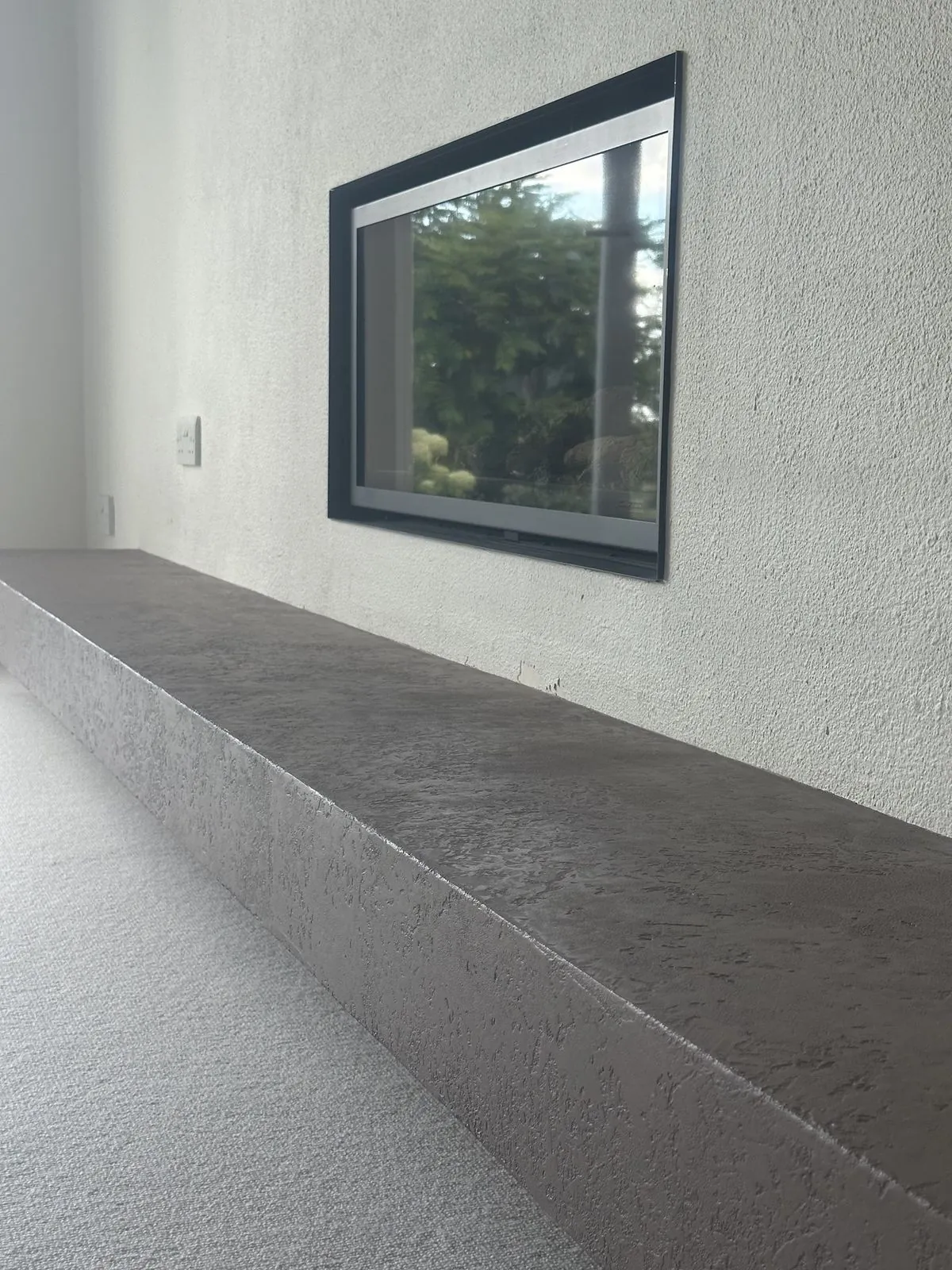
A reception desk and matching ledges finished in microcement for a commercial interior.
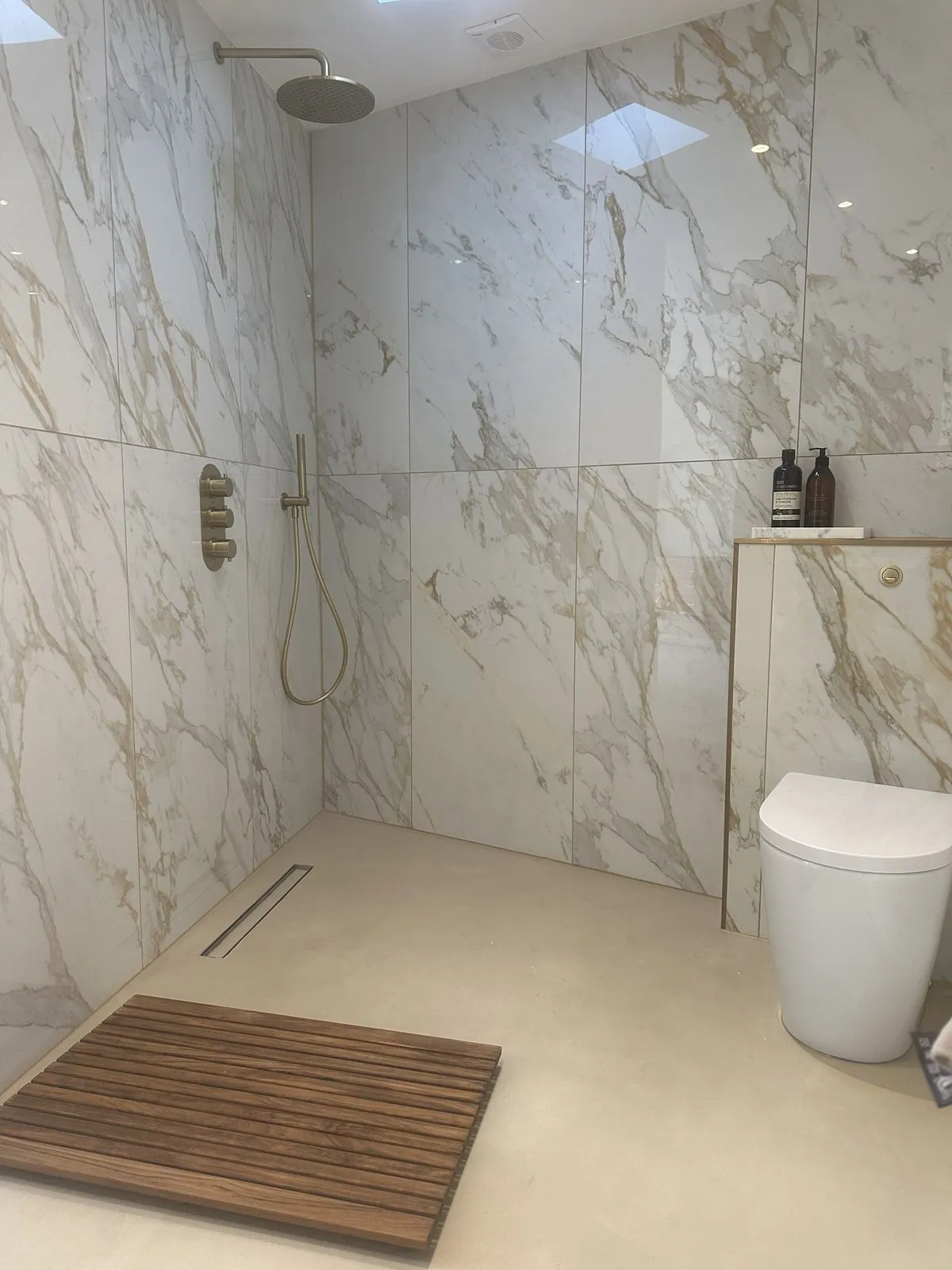
Wet room
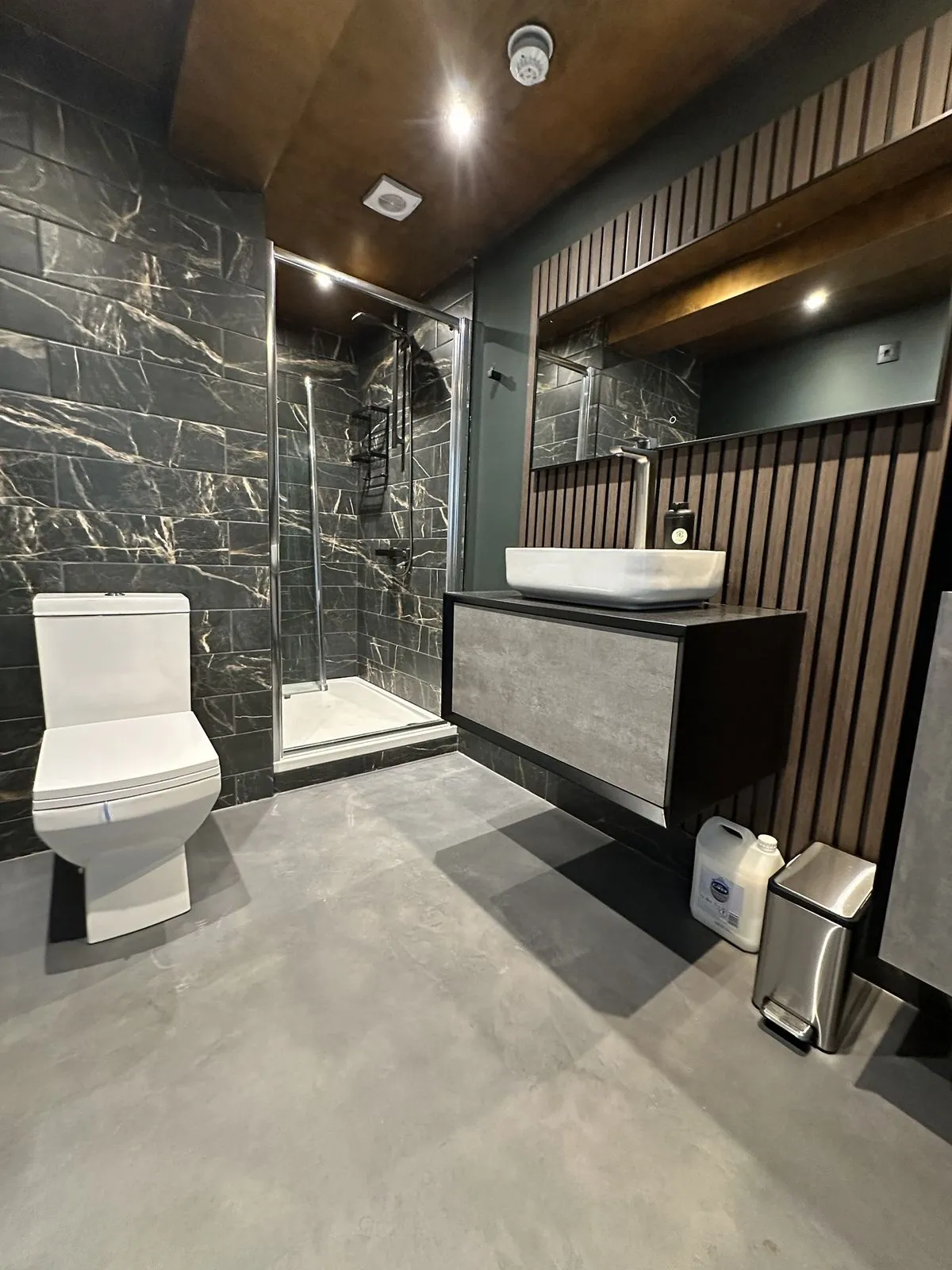
Microcement across a wet room floor and into the shower, in one continuous surface with no grout lines.
Microcement is priced on the area and the work needed to prepare it. The main factors are:
Microcement is easy to keep clean. A few simple habits keep it looking good.
We're based in Gloucester and install microcement across Gloucestershire and the Cotswolds, and we travel for specialist projects anywhere in the UK.
Yes, in most cases. If the tiles are firmly bonded, we clean and prime them and fill the grout lines before applying the microcement, so there's no need to rip them out. Loose or hollow tiles have to be removed first.
Properly sealed microcement is water-resistant and suitable for showers and wet rooms. In wet areas we also make sure the surface underneath is waterproofed and the details around trays, drains and corners are right.
Yes. Microcement is thin, so it works well with most underfloor heating. The heating needs to be off while we apply it, then brought back up gradually afterwards.
Smooth microcement can be slippery when wet, so for floors, showers and wet rooms we add an anti-slip finish to the sealer.
We embed a reinforcing mesh in the base coats as an anti-crack layer and prepare the surface properly, which reduces the risk. Structural cracks and movement in the floor below still need dealing with, and we'll check for them when we survey the job.
Usually several days, because each coat needs to dry before the next and the sealer needs time to cure. We'll give you a timescale with your quote and tell you when the room can be used.
There's a wide range, from warm whites and stone shades to greys and darker tones. We bring samples and can help match the colour to your tiles, worktops or flooring.
Tiles are hard-wearing and familiar, but grout lines collect dirt and can crack. Microcement gives one seamless surface that's easy to clean, can often go over your existing tiles, and suits modern, minimal interiors. We'll help you decide what's right for your room.